Why charging your company car at home during the day is smart in times of energy surpluses

In a recent study, the CREG warns about an oversupply of solar power, especially on sunny days. This means there’s a lot of cheap electricity available during peak solar production times. Perfect timing, then, to plug in your electric company car at home. You pay less while also helping to relieve the electrical grid: that’s a real win-win!
Making use of surplus solar energy
During periods of low demand and high solar production, there’s an excess of cheap electricity that puts pressure on the grid. The CREG emphasizes that flexibility in energy consumption is essential. By charging during the day, you as a home worker can take full advantage of this cheaper energy and at the same time reduce the load on the grid. With a dynamic energy contract, this can even lead to reimbursements.
Smart charging times and cost savings
Where traditionally night-time charging is the norm, charging during the day can be more financially advantageous. With a dynamic energy contract, you benefit from low rates during periods of solar energy surplus. This can even result in reimbursements, saving you even more. By aligning your charging behavior with the supply of renewable energy, you not only reduce your costs but also contribute to a more efficient energy system.
Ecological benefits
Charging during the day means making greater use of renewable energy and being less dependent on fossil fuels. This helps reduce CO₂ emissions and contributes to more sustainable energy consumption. For companies with electric vehicles, this is also an opportunity to shrink their ecological footprint and project a green image to clients and partners.
Blossom: smart home charging and energy management
At Blossom, we develop smart charging solutions to help you optimize your energy consumption.
- Coupling with solar panels: Have solar panels? Blossom maximizes the use of your own solar power to charge your vehicle, thereby lowering your grid consumption and costs.
- Insight into energy consumption: the app gives you insight into your charging sessions and home consumption, so you can charge smartly.
Charging during the day is saving money, going greener, and keeping the grid healthy. With Blossom, you have all the tools in hand to smartly align your charging strategy with the sun. Just plug in, and we’ll take care of the rest.
Gerelateerde artikels
Belgische bedrijven betalen samen meer dan 100 miljoen euro per jaar te veel voor het laden van hun elektrische bedrijfswagens. Verbieden of doorrekenen lost dat niet op. Inzicht, verantwoordelijkheid en een eerlijke verrekening via de energiefactuur doen dat wel.
De elektrificatie van de Belgische bedrijfsvloot is een succes. Vandaag rijden er 234.472 elektrische salariswagens rond. Maar met de elektrische wagen kwam een vraag die bij diesel nooit speelde: waar tank je? Bij een brandstofwagen maakt het weinig uit welk tankstation je kiest. Bij een elektrische wagen hangt de prijs af van de plek. Op kantoor kost een kilowattuur zo'n 18 eurocent, thuis ongeveer 32 eurocent volgens het CREG-tarief, aan een publieke laadpaal gemiddeld 55 eurocent, en aan een snellader nog meer.
In vloten waar niemand het laadgedrag stuurt, zien we dat tot 60 procent van de energie publiek geladen wordt. Dat kost tot 480 euro per wagen per jaar, en over de hele markt meer dan 100 miljoen euro. Niet omdat bestuurders onverschillig zijn. Wie 's ochtends naar kantoor rijdt, er de hele dag staat zonder te laden en 's avonds aan de paal bij de supermarkt hangt, beseft meestal niet dat zijn werkgever daar drie keer meer betaalt. Niemand heeft het hem ooit gezegd.
Twee reflexen die ik wil afraden
Wie dat beseft, grijpt snel naar een van twee oplossingen. De eerste is verbieden: geen snelladen meer, of alleen met toestemming. Maar snelladen heeft zijn plaats. Voor een vertegenwoordiger die 40.000 kilometer per jaar rijdt of een bestuurder zonder oprit is het geen luxe, maar een noodzaak. Een verbod treft precies de verkeerde mensen, creëert opnieuw rijbereikangst en ondermijnt het draagvlak voor elektrisch rijden.
De tweede reflex is doorrekenen: wie duur laadt, betaalt het verschil zelf. Dat maakt van een voordeel een bron van conflict. Het straft wie in een appartement of in de stad woont en thuis niet kan laden. En het is administratief zwaar en fiscaal gevoelig.
Beide reflexen behandelen de medewerker als het probleem. Hij is de oplossing.
Wat wel werkt
De meeste bestuurders passen hun gedrag aan zodra ze zien wat het kost. Toon iemand zijn gemiddelde laadprijs naast die van vergelijkbare collega's, en het gesprek gaat vanzelf. Waar dat niet volstaat, kan de fleetmanager met de cijfers op tafel een gesprek voeren. Dat is geen controle, maar verantwoordelijkheid: de werkgever geeft inzicht, de medewerker maakt een bewuste keuze.
Die verantwoordelijkheid geldt in twee richtingen. Wie van zijn medewerkers verwacht dat ze op kantoor laden, moet daar ook laadpunten voorzien. En wie wil dat ze thuis laden, moet hen eerlijk vergoeden.
De zwakke schakel: de thuisvergoeding
Daar knelt het vandaag. De meeste werkgevers vergoeden thuisladen tegen het CREG-tarief, een forfait dat de stroomprijzen met vertraging volgt. Stijgen de prijzen, dan schiet de medewerker voor. Dalen ze, dan betaalt de werkgever te veel. Zodra thuisladen aanvoelt als verlies, kiest de bestuurder voor de laadpas en de publieke paal. Wie de laadmix wil sturen, moet dus eerst de thuisvergoeding oplossen.
De fiscus aanvaardt de werkelijke kost al als basisprincipe. Het forfait is een pragmatische vereenvoudiging, omdat de echte prijs moeilijk te achterhalen is. Laten we de werkelijke kost dan de eenvoudige optie maken.
Verrekenen via de energiefactuur
Er bestaat een logische plek om dat te doen: de energiefactuur. De energieleverancier kent de werkelijke prijs, inclusief nettarieven en capaciteitstarief. De laadpaal weet precies hoeveel de wagen geladen heeft. Breng die twee samen, en het thuisladen verschijnt als aparte lijn op de factuur, rechtstreeks betaald door de werkgever, zoals vandaag al gebeurt met het thuisinternet van veel werknemers. Geen forfait meer, geen onkostennota's, geen discussie.
Die aanpak moet ook klaar zijn voor wat komt. Elektrische wagens kunnen binnenkort stroom terugleveren aan de woning. Dat heet vehicle-to-home. Maar de wagen is van de werkgever en de batterij werd gevuld met stroom die hij betaalde. Wie betaalt voor de kilowattuur die 's avonds naar de keuken vloeit? Zonder duidelijke regels creëren we een nieuwe grijze zone.
Het principe moet daarom eenvoudig zijn: elke uitwisseling van energie tussen wagen en woning, in beide richtingen, wordt verrekend aan de werkelijke kost zoals die op de energiefactuur staat. Eén regel voor laden, ontladen en zonnepanelen.
Een gecertificeerde meter als voorwaarde
Dat kan alleen met metingen die juridisch standhouden. Daarom moet elke laadpaal bij een bedrijfswagen thuis een gecertificeerde MID-meter hebben. Zonder sluitende meting geen afrekening aan werkelijke kost, en dus opnieuw discussie. Wie vandaag laadpalen installeert, maakt die keuze nu best, zodat ze morgen niet vervangen moeten worden.
Een zaak voor de hele sector
Niemand kan dit alleen. Er zijn energieleveranciers, netbeheerders, laadpuntoperatoren, leasemaatschappijen, werkgevers en een overheid die het fiscale kader bepaalt. Er liggen goede voorstellen op tafel, en die vormen een basis. Wat nu nodig is, is een akkoord dat de hele sector draagt: gemeenschappelijke datastandaarden, duidelijke rollen en fiscale erkenning.
Elektrificeren was de eerste stap. Slim laden en eerlijk verrekenen is de volgende. Als we dat goed regelen, wordt de bedrijfswagen een deel van het energiesysteem in plaats van een kostenpost die niemand begrijpt.
Dann Rogge is CEO van Blossom.

Why TCO is not enough and TCU gives the real answer
Is electric driving really cheaper? For many companies and drivers, that is an important question today. The answer depends largely on how an electric car is used and charged in practice.
It is often said that driving electric is cheaper than driving a petrol or diesel car. But is that really true?
The honest answer is less black and white. In some situations, electric driving is indeed cheaper. In others, it is not. It all depends on charging behaviour, usage patterns and how costs are calculated.
Why electric driving looks cheaper on paper
Recent figures show that the cost per kilometre of electric cars is often lower than that of fossil-fuel vehicles. Especially when drivers can charge at home, the difference can be significant.
But as soon as drivers become more dependent on public charging points or fast chargers, that picture can change quickly. In many cases, the cost moves closer to that of petrol or diesel — and can sometimes even be higher.
And that is exactly where the problem lies: many comparisons focus only on energy costs.
The limitation of TCO
The total cost of a car obviously consists of more than energy consumption alone. That is why companies often look at Total Cost of Ownership (TCO).
TCO provides a more complete picture because it takes into account factors such as:
- purchase price
- maintenance
- insurance
- depreciation
- fuel or charging costs
This makes TCO a better method for comparing vehicles.
However, TCO also falls short when it comes to electric mobility.
Why? Because TCO works with averages, while reality can differ significantly from one driver to another.
From theory to reality: TCU
That is why another KPI is gaining importance: Total Cost of Use (TCU).
Where TCO predicts what a car should cost, TCU shows what that car actually costs in day-to-day use.
TCU takes into account:
- where someone charges
- when charging takes place
- how many kilometres are driven
- which types of charging points are used
- which tariffs are paid
- which choices are made on the road
As a result, two identical electric cars can ultimately have a completely different total cost.
The impact of charging behaviour on the cost of electric driving
Charging behaviour has a major impact on the final cost of electric driving.
One driver mainly charges at home and keeps costs low. Another frequently uses public charging points or fast chargers and sees energy costs rise quickly.
Electric driving is therefore not automatically cheaper.
It becomes cheaper when it is used in the right way.
When is electric driving cheapest?
In practice, electric driving is financially most attractive for drivers who:
- can charge at home
- can charge at work
- make conscious choices about when they charge
- limit fast charging where possible
Drivers who mainly depend on public charging points or regularly use fast chargers often see the financial advantage decrease significantly.
The cost of electric driving is therefore determined not only by the car itself, but also by where, when and at what tariff it is charged.
Why TCU is crucial for companies and fleet managers
For companies and fleet managers, this difference becomes even more relevant.
Not because the technology works differently, but because employees’ charging behaviour can vary significantly. A fleet of identical electric cars can therefore show major differences in actual usage costs.
Without insight into that behaviour, it becomes difficult to keep total charging costs under control.
By making charging behaviour visible and adjusting it where needed, companies can reduce costs without having to change their entire fleet strategy.
From insight to action: the role of data in fleet management
For fleet managers, the story does not end with the decision to go electric. The real challenge only begins afterwards.
Without insight into:
- charging behaviour
- charging points used
- charging tariffs
- usage patterns
the actual cost of an electric fleet remains difficult to predict — and even harder to optimise.
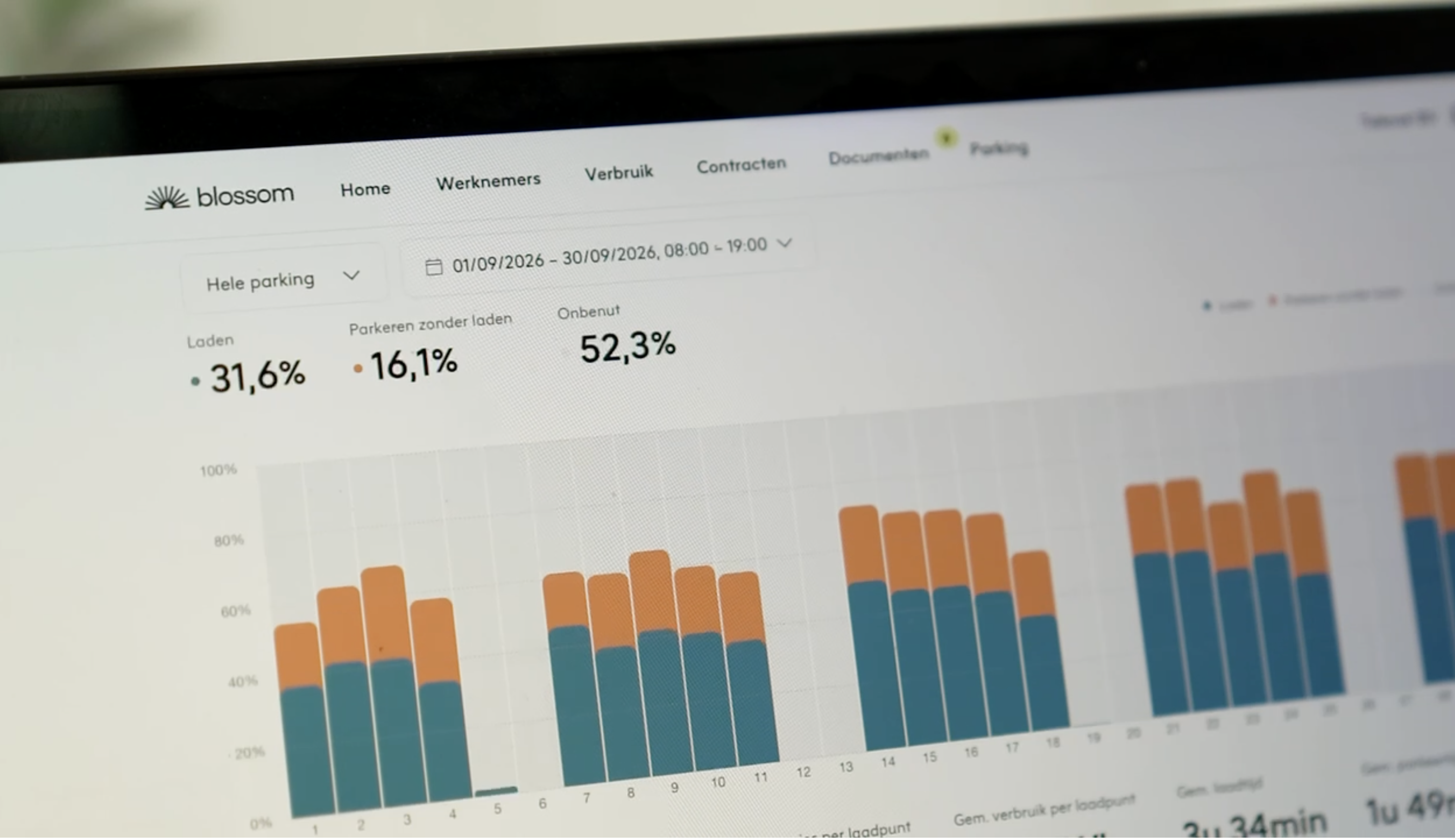
That is why more and more organisations are moving from static reporting to real-time insights into their fleet.
At Blossom, we help fleet managers make exactly that difference. By making charging behaviour, charging costs and usage patterns transparent, companies gain insight into their actual costs as well as concrete ways to optimise them.
Not through complex theoretical models or assumptions, but based on real-world data.
This enables companies to:
- keep charging costs under better control
- make more informed decisions
- guide employees towards more efficient charging behaviour
- structurally optimise their EV strategy
Frequently asked questions about electric driving
1. Is electric driving always cheaper?
No. The cost of electric driving depends heavily on charging behaviour, the type of charging points used, the tariffs paid and the number of kilometres driven. Drivers who mainly charge at home or at work can generally drive electric more cheaply than those who frequently use public charging points or fast chargers.
2. What is the difference between TCO and TCU?
TCO (Total Cost of Ownership) calculates the total ownership cost of a car based on factors including purchase, depreciation, maintenance, insurance and energy.
TCU (Total Cost of Use) looks at what a car actually costs in practice, based on real usage and actual charging costs.
3. Why are public charging points often more expensive?
Public charging points, and fast chargers in particular, often apply higher tariffs than charging at home or at work. Frequent public charging can therefore significantly increase the total cost of electric driving.
4. When is electric driving financially most attractive?
Electric driving is generally most attractive for drivers who can regularly charge at home or at work, make conscious choices about when they charge and limit the use of more expensive fast chargers.
Conclusion: is electric driving cheaper?
Electric driving is not a simple calculation.
It is not about one figure or one comparison, but about the combination of technology, usage, charging costs and behaviour.
TCO helps companies make the right choice when purchasing a car.
TCU determines whether that choice also pays off in practice.
And that is exactly where the difference is made today.
Discover the real cost of electric driving with Blossom
Want to know what electric driving really costs within your fleet?
With Blossom, you gain insight into charging behaviour, charging costs and usage patterns, so you can see not only where costs arise, but also where you can optimise.
Discover how Blossom helps you manage your electric fleet more intelligently and cost-efficiently.
Belgische bedrijven betalen samen meer dan 100 miljoen euro per jaar te veel voor het laden van hun elektrische bedrijfswagens. Verbieden of doorrekenen lost dat niet op. Inzicht, verantwoordelijkheid en een eerlijke verrekening via de energiefactuur doen dat wel.
De elektrificatie van de Belgische bedrijfsvloot is een succes. Vandaag rijden er 234.472 elektrische salariswagens rond. Maar met de elektrische wagen kwam een vraag die bij diesel nooit speelde: waar tank je? Bij een brandstofwagen maakt het weinig uit welk tankstation je kiest. Bij een elektrische wagen hangt de prijs af van de plek. Op kantoor kost een kilowattuur zo'n 18 eurocent, thuis ongeveer 32 eurocent volgens het CREG-tarief, aan een publieke laadpaal gemiddeld 55 eurocent, en aan een snellader nog meer.
In vloten waar niemand het laadgedrag stuurt, zien we dat tot 60 procent van de energie publiek geladen wordt. Dat kost tot 480 euro per wagen per jaar, en over de hele markt meer dan 100 miljoen euro. Niet omdat bestuurders onverschillig zijn. Wie 's ochtends naar kantoor rijdt, er de hele dag staat zonder te laden en 's avonds aan de paal bij de supermarkt hangt, beseft meestal niet dat zijn werkgever daar drie keer meer betaalt. Niemand heeft het hem ooit gezegd.
Twee reflexen die ik wil afraden
Wie dat beseft, grijpt snel naar een van twee oplossingen. De eerste is verbieden: geen snelladen meer, of alleen met toestemming. Maar snelladen heeft zijn plaats. Voor een vertegenwoordiger die 40.000 kilometer per jaar rijdt of een bestuurder zonder oprit is het geen luxe, maar een noodzaak. Een verbod treft precies de verkeerde mensen, creëert opnieuw rijbereikangst en ondermijnt het draagvlak voor elektrisch rijden.
De tweede reflex is doorrekenen: wie duur laadt, betaalt het verschil zelf. Dat maakt van een voordeel een bron van conflict. Het straft wie in een appartement of in de stad woont en thuis niet kan laden. En het is administratief zwaar en fiscaal gevoelig.
Beide reflexen behandelen de medewerker als het probleem. Hij is de oplossing.
Wat wel werkt
De meeste bestuurders passen hun gedrag aan zodra ze zien wat het kost. Toon iemand zijn gemiddelde laadprijs naast die van vergelijkbare collega's, en het gesprek gaat vanzelf. Waar dat niet volstaat, kan de fleetmanager met de cijfers op tafel een gesprek voeren. Dat is geen controle, maar verantwoordelijkheid: de werkgever geeft inzicht, de medewerker maakt een bewuste keuze.
Die verantwoordelijkheid geldt in twee richtingen. Wie van zijn medewerkers verwacht dat ze op kantoor laden, moet daar ook laadpunten voorzien. En wie wil dat ze thuis laden, moet hen eerlijk vergoeden.
De zwakke schakel: de thuisvergoeding
Daar knelt het vandaag. De meeste werkgevers vergoeden thuisladen tegen het CREG-tarief, een forfait dat de stroomprijzen met vertraging volgt. Stijgen de prijzen, dan schiet de medewerker voor. Dalen ze, dan betaalt de werkgever te veel. Zodra thuisladen aanvoelt als verlies, kiest de bestuurder voor de laadpas en de publieke paal. Wie de laadmix wil sturen, moet dus eerst de thuisvergoeding oplossen.
De fiscus aanvaardt de werkelijke kost al als basisprincipe. Het forfait is een pragmatische vereenvoudiging, omdat de echte prijs moeilijk te achterhalen is. Laten we de werkelijke kost dan de eenvoudige optie maken.
Verrekenen via de energiefactuur
Er bestaat een logische plek om dat te doen: de energiefactuur. De energieleverancier kent de werkelijke prijs, inclusief nettarieven en capaciteitstarief. De laadpaal weet precies hoeveel de wagen geladen heeft. Breng die twee samen, en het thuisladen verschijnt als aparte lijn op de factuur, rechtstreeks betaald door de werkgever, zoals vandaag al gebeurt met het thuisinternet van veel werknemers. Geen forfait meer, geen onkostennota's, geen discussie.
Die aanpak moet ook klaar zijn voor wat komt. Elektrische wagens kunnen binnenkort stroom terugleveren aan de woning. Dat heet vehicle-to-home. Maar de wagen is van de werkgever en de batterij werd gevuld met stroom die hij betaalde. Wie betaalt voor de kilowattuur die 's avonds naar de keuken vloeit? Zonder duidelijke regels creëren we een nieuwe grijze zone.
Het principe moet daarom eenvoudig zijn: elke uitwisseling van energie tussen wagen en woning, in beide richtingen, wordt verrekend aan de werkelijke kost zoals die op de energiefactuur staat. Eén regel voor laden, ontladen en zonnepanelen.
Een gecertificeerde meter als voorwaarde
Dat kan alleen met metingen die juridisch standhouden. Daarom moet elke laadpaal bij een bedrijfswagen thuis een gecertificeerde MID-meter hebben. Zonder sluitende meting geen afrekening aan werkelijke kost, en dus opnieuw discussie. Wie vandaag laadpalen installeert, maakt die keuze nu best, zodat ze morgen niet vervangen moeten worden.
Een zaak voor de hele sector
Niemand kan dit alleen. Er zijn energieleveranciers, netbeheerders, laadpuntoperatoren, leasemaatschappijen, werkgevers en een overheid die het fiscale kader bepaalt. Er liggen goede voorstellen op tafel, en die vormen een basis. Wat nu nodig is, is een akkoord dat de hele sector draagt: gemeenschappelijke datastandaarden, duidelijke rollen en fiscale erkenning.
Elektrificeren was de eerste stap. Slim laden en eerlijk verrekenen is de volgende. Als we dat goed regelen, wordt de bedrijfswagen een deel van het energiesysteem in plaats van een kostenpost die niemand begrijpt.
Dann Rogge is CEO van Blossom.

At Blossom, we believe that managing an electric fleet can be easier and smarter. That’s why we offer fleet managers an intuitive and reliable platform to effortlessly manage home chargers, charging cards and associated costs. No unnecessary complexity – just all the support you need to transition smoothly to a modern, sustainable fleet.
From invitation to installation
The Blossom platform starts by inviting employees who need a home charger or charging card. This process is completed in a few simple steps:
- The fleet manager enters the employee’s email address and they receive an invitation.
- The employee is guided to request their charging card and/or home charger on the platform.
- Our installation partner arranges the installation appointment.
- The fleet manager can track each employee’s progress through the installation process.
This approach ensures a streamlined onboarding experience while keeping the process simple and transparent.
Full visibility and control
Once the home charger is installed and the employee is fully ‘on board’, Blossom provides a detailed overview of all charging sessions, costs and any reimbursements. This gives fleet managers the insights they need to effectively monitor and manage energy consumption and associated costs. Clear reports and a user-friendly interface make it easy to optimise charging costs and fleet usage efficiently.
Discover how Blossom makes fleet management easier
From onboarding and installation to managing charging sessions and costs, Blossom’s easy-to-use solution saves fleet managers significant time and effort throughout the entire process. Whether you’re setting up a new electric fleet or optimizing an existing one, we’re here to help.
Curious about how we can improve your fleet management?
Contact us and see for yourself!
Together, we can make electric driving easy and worry-free.

The electric revolution is in full swing. More and more companies are offering their employees electric company cars as part of their sustainability strategy. But this transition also raises new questions: How does home charging work? And what are the tax implications? A recent circular from the Belgian Federal Public Service for Finance (2024/C/77) provides answers. At the same time, Blossom demonstrates how companies can seamlessly integrate this into their policies.
A look at the tax guidelines
Imagine an employee charging their electric company car at home. Who pays for the electricity? And what does that mean from a tax perspective? This is exactly what the circular clarifies. A distinction is made between electricity supplied directly by the employer and electricity paid for by the employee and reimbursed afterward.
In the case of direct supply, for example, through a charging card or a charging station at the office, the costs fall under the fixed taxable benefit of the company car. However, if an employee initially pays for the electricity costs themselves, the reimbursement is considered a separate taxable benefit—unless it concerns professional travel expenses. For commuting, employers can reimburse part of the cost tax-free, up to a maximum of €500 per year in 2026. Private kilometers, however, remain taxable.
The circular also provides a special exemption to facilitate the transition to electric driving. If a charging station is equipped with a system that accurately records the electricity used for the company car, the employer may reimburse these costs without additional taxation. A fixed rate per kWh, known as the CREG tariff, can even be used, simplifying administration as long as the rules are followed.
Practice: simplicity versus complexity
While the circular provides clarity, practical challenges remain. How do you accurately register the company car’s consumption? How do you ensure that employees are not taxed on their charging costs? And how do you keep the entire process transparent and fair? This is where technology and smart solutions become essential.
Blossom addresses these challenges by offering companies comprehensive charging solutions that not only comply with tax requirements but are also practical, user-friendly, and future-proof.
Blossom: bridging the gap between regulations and ease of use
At Blossom, simplicity is key. Our goal is to relieve companies and their employees of both technical and administrative burdens. We start with a high-quality home charging solution: reliable chargers designed with the whole family in mind. An employee can charge their company car, while other family members can use the charger for their private vehicles. The smart system automatically records the electricity used for the company car.
But Blossom goes even further. Thanks to our Fleet Dashboard, employers have real-time insight into each employee’s consumption. This allows for effortless reimbursements based on the CREG tariff. Additionally, all our home chargers are equipped with MID-certified meters, ensuring the highest standards of measurement accuracy. This guarantees that every kilowatt-hour charged is correctly recorded.
By combining technology with tax expertise, Blossom perfectly aligns with the requirements of the circular. Reimbursements are processed smoothly, with no surprises for employers or employees. The result? Less administrative hassle, happier employees, and a company ready for the future.
A step forward in sustainability
The transition to electric driving is more than just a technical adjustment; it’s a step towards a more sustainable world. With solutions like those from Blossom, this transition becomes simpler, more feasible, and more attractive—not only for employers looking to become more sustainable but also for employees who want to switch to electric driving worry-free.
Blossom proves that the future of mobility can be green, smart, and user-friendly. Curious about how we can support your company? We’re ready to help you build an electric mobility policy that works for everyone.
Want to learn more? Check out the circular here: MyMinfin